
Decatur, Georgia occupies a unique position in the Atlanta metropolitan area. Incorporated as an independent city within DeKalb County, it draws homeowners who value walkability, mature tree canopy, strong school options, and a neighborhood identity distinct from the broader sprawl of suburban Atlanta. Home values in Decatur have climbed steadily over the past decade, with many properties now trading well above $600,000, and the city’s tight inventory means renovating an existing home often delivers stronger financial returns than relocating. For homeowners weighing their options, understanding how professional remodeling works within Decatur’s specific regulatory and architectural context is essential before committing to any scope of work.
Decatur’s residential stock is a study in architectural variety. Streets in the Oakhurst, Winnona Park, and College Heights neighborhoods are lined with Craftsman bungalows, Colonial Revivals, and mid-century ranch homes, many built between 1920 and 1965. These structures carry character that newer construction cannot replicate, but they also carry deferred maintenance, outdated systems, and floor plans that no longer match how families live. A home built for the household patterns of 1950 often lacks the open kitchen-to-living connectivity, primary suite amenities, and flexible office or flex space that modern buyers expect. Remodeling these homes thoughtfully, without erasing what makes them worth preserving, is the central challenge for any contractor working in Decatur.
The current market reinforces this dynamic. Decatur’s housing inventory remains limited, and competition for move-in-ready properties pushes buyers toward homes that are already updated. Sellers who have invested in quality remodeling consistently command premiums that justify the renovation cost. At the same time, homeowners who choose to stay and renovate rather than sell into a difficult buying environment are discovering that a well-executed remodel can extend the enjoyment and value of their property by decades. Either path, staying or preparing to sell, points toward the same decision: invest in professional remodeling work that meets the standards the Decatur market demands.
Homeowners evaluating a remodel in Decatur should begin by clearly defining their goals, establishing a realistic budget, and engaging a contractor with demonstrated experience in this specific market. The regulatory environment, the character of the housing stock, and the expectations of the neighborhood all create variables that generalist contractors who primarily work in new construction communities may not be equipped to navigate. Partnering with a team that has worked through Decatur’s permit process, understands the DeKalb County building department requirements, and has experience matching new work to older structures pays dividends throughout every phase of a project.
What Makes Decatur’s Housing Stock Distinct
The homes that define Decatur’s most sought-after streets were built by craftsmen who worked with solid wood framing, plaster walls, and details like built-in cabinetry, picture rails, and hardwood floors throughout. These elements hold up well over time when properly maintained, but they create specific conditions for a remodeling contractor. Opening a wall in a 1940s Decatur bungalow often reveals wiring that predates modern electrical codes, plumbing that has been patched multiple times, and framing configurations that differ significantly from today’s standard dimensions. A contractor who has worked in these homes knows to budget for discovery costs and to have a clear communication process when conditions inside the walls differ from expectations. A contractor who primarily builds new homes in suburban subdivisions may not have developed those systems.
Decatur also has active neighborhood associations and, in some areas, design guidelines that shape what exterior modifications are permissible. While the city itself does not have a citywide historic district in the same way that some Atlanta neighborhoods do, community expectations around maintaining the character of established streets are real and worth understanding before planning any work that affects the exterior of a home. An experienced local contractor will understand where those expectations apply and how to work within them while still delivering a project that meets the homeowner’s functional goals.
Kitchen Remodeling in Decatur: Balancing Original Character and Modern Function
Kitchen renovations are among the most requested projects in Decatur’s older residential neighborhoods. Many of the bungalows and Colonial Revivals in areas like Oakhurst and Winnona Park were built with closed-off kitchens that made sense for household staffing patterns of an earlier era but feel isolated and disconnected from the way families gather today. Opening the kitchen to adjacent dining or living spaces, while carefully managing structural modifications to preserve the integrity of the existing frame, is a common scope of work in these homes.
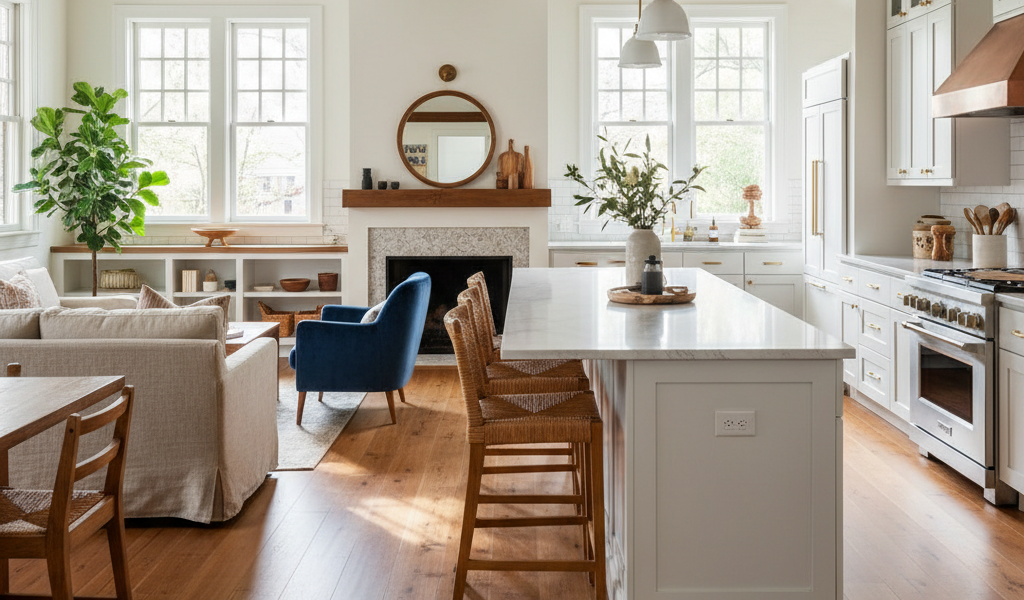
Countertop and cabinet upgrades in a Decatur kitchen renovation should reflect the quality level the neighborhood supports. Quartz countertops, custom or semi-custom cabinetry, and professional-grade appliances are standard in homes at the price points Decatur commands. Lighting design, including under-cabinet task lighting and a thoughtful mix of ambient and pendant fixtures, completes the transformation. The goal is not to make a 1930s bungalow look like a newly built home; it is to bring the kitchen’s function and finish into alignment with how the household actually lives while maintaining respect for the original architecture. Homeowners who want to learn more about kitchen renovation specifics for this market can review our home remodeling services page.
Home Additions: Expanding Without Losing the Neighborhood Context
Many Decatur homeowners reach a point where the existing footprint simply cannot accommodate a growing family or changing lifestyle without significant sacrifice. The answer is often a well-designed addition rather than a move. Rear additions that expand the kitchen and primary living area, second-story additions that add bedrooms and bathrooms above an existing one-story footprint, and detached accessory structures for office or studio use are all viable options in most Decatur neighborhoods, subject to setback and lot coverage requirements set by DeKalb County zoning.
The critical quality standard for a Decatur addition is that it does not look like an addition from the street. Rooflines, siding materials, window proportions, and trim profiles must coordinate with the existing structure so that the finished product reads as a coherent whole rather than a box appended to the back of an older home. Achieving that level of design and execution integration requires a contractor who treats architecture and construction as inseparable disciplines. Homeowners considering an addition can explore scope and feasibility through our home additions page.
Bathroom Renovations: Where Outdated Finishes Cost the Most at Resale
Bathrooms in Decatur’s older homes are frequently the single most visible indicator of a home’s update status. Pink tile, fiberglass tub surrounds, and vanities with builder-grade hardware from three decades ago signal to buyers that the rest of the home may carry similar deferred investment, even when that is not the case. A professional bathroom renovation in Decatur typically involves full tile replacement, a new vanity and fixtures, updated lighting, and in many cases a reconfiguration of the layout to add a double vanity or a larger shower enclosure where the original tub-shower combination occupied insufficient space.
Primary bathroom renovations in the $40,000-to-$80,000 range have become standard for Decatur homes targeting the upper end of their neighborhood’s price band. At that investment level, heated floors, frameless glass enclosures, and custom tile work are not extravagances; they are the finish level the market has come to expect in homes competing for buyers who have the option to purchase elsewhere in Sandy Springs, Brookhaven, or other comparable submarkets. Secondary bathroom renovations can be executed at significantly lower cost while still bringing the home’s overall presentation into alignment with buyer expectations.
Navigating Permits and the DeKalb County Process
All structural remodeling work, additions, and significant mechanical upgrades in Decatur require permits from DeKalb County’s Building and Development Services department. The permit process here involves plan review, inspections at multiple stages of construction, and final inspection before a certificate of occupancy or certificate of completion is issued. Projects that skip permitting create significant liability for homeowners at resale, as unpermitted work that is discovered during a buyer’s due diligence process can kill transactions or require expensive retroactive remediation.
A professional contractor in Decatur will handle the full permit application process, coordinate with the county inspectors at each required inspection point, and ensure that all work is completed to the standard required for sign-off. Homeowners should be wary of any contractor who suggests working without permits as a cost-saving measure. The short-term savings are not worth the long-term exposure. For context on how professional permitting works in the broader Atlanta metro, our Sandy Springs construction resource page provides a useful framework.
Choosing a Remodeling Contractor for a Decatur Project
Selecting the right contractor is the single most consequential decision a Decatur homeowner makes when planning a remodel. The contractor’s experience with older homes, their familiarity with the local permit process, the quality of their subcontractor relationships, and their communication systems throughout a project all determine whether the experience is one the homeowner would repeat or one they would warn neighbors to avoid. References from completed projects in Decatur and adjacent neighborhoods like Kirkwood, Candler Park, and Avondale Estates provide meaningful signal because the housing stock and regulatory environment are similar.
Traditional Homes of Georgia brings licensed general contractor expertise to the full scope of remodeling work that Decatur homeowners pursue. From kitchen and bathroom renovations to structural additions and whole-home remodels, the team operates with the transparency, craftsmanship standards, and local regulatory knowledge that projects in this market require. Homeowners ready to explore what a remodel could deliver for their specific property are encouraged to start a conversation through our remodeling page.