
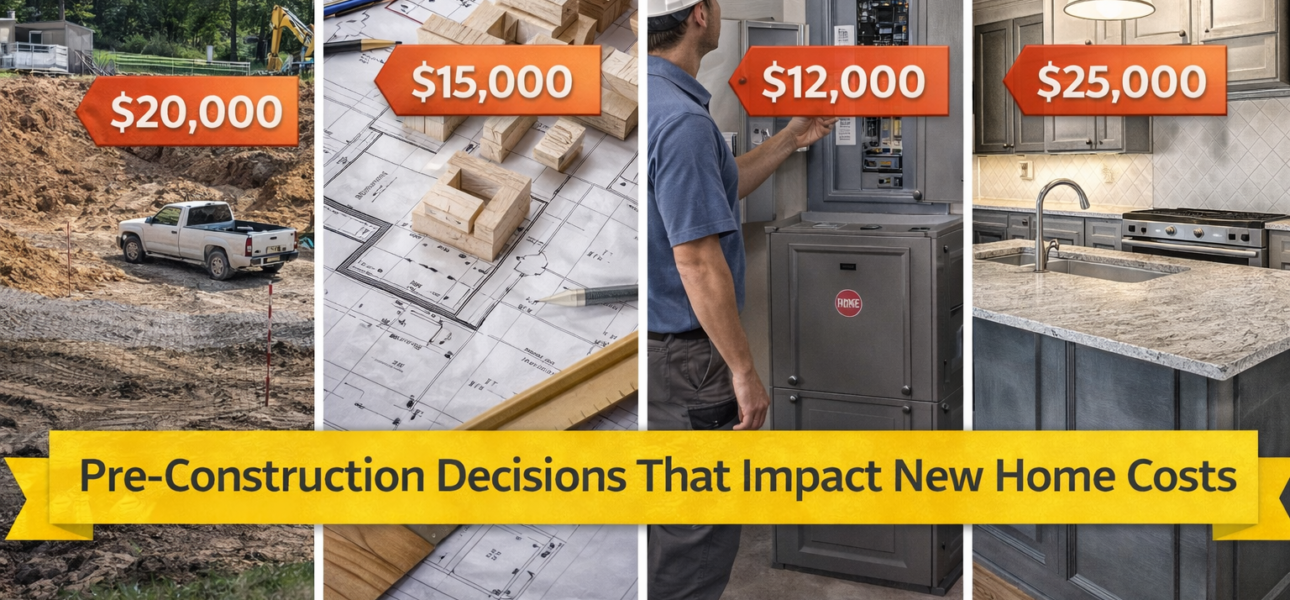
Before construction begins, homeowners make a series of decisions that quietly lock in a large portion of the final cost. In Atlanta, these decisions are amplified by site conditions, zoning constraints, stormwater requirements, and market expectations. Understanding which pre-construction choices carry the most financial weight helps homeowners control budgets, reduce risk, and avoid costly change orders later in the build.
Pre-construction is not just planning; it is the phase where most cost outcomes are determined. Once permits are issued and construction begins, flexibility drops and costs rise quickly.
How Pre-Construction Choices Set the Budget
Early decisions define scope, complexity, and sequencing. Choices made before permits affect foundation design, structural systems, inspections, allowances, and construction timelines. The more clarity achieved before permits are submitted, the fewer surprises occur during construction.
For a broader understanding of how these decisions integrate into the building process, visit our new home construction in Atlanta service page.
Lot Selection and Site Conditions
Lot characteristics are one of the largest and least understood cost drivers. Slope, soil conditions, access, utilities, drainage, and existing infrastructure all influence construction cost. Infill and tear-down lots often carry hidden expenses related to utility upgrades, demolition, and neighborhood constraints.
Steep slopes, poor soils, limited access, or drainage challenges can significantly increase grading, foundation, and stormwater costs.
Building Footprint and Home Size
Square footage matters, but building footprint often matters more. Wider homes increase foundation and roof costs and may create setback conflicts. Compact footprints can reduce site work but may require more vertical construction, which introduces structural complexity.
Balancing footprint and layout early helps control both structural and site-related costs.
Structural Complexity and Framing Choices
Design features such as large open spans, tall ceilings, cantilevers, and complex rooflines add cost through additional engineering, materials, and labor. Structural simplicity does not mean sacrificing quality; it means making intentional decisions that align with budget goals.
Early coordination between design and construction helps identify where complexity adds value and where it simply adds cost.
Zoning, Setbacks, and Variances
Designs that push zoning limits or require variances introduce risk. Resubmittals, hearings, and redesigns increase soft costs and delay schedules. Carrying costs during delays can be significant.
Designing within zoning and setback requirements whenever possible improves predictability and reduces both direct and indirect costs.
Stormwater Strategy and Impervious Coverage
In Atlanta, stormwater management decisions can materially affect cost. Early choices about driveway size, patios, roof area, and hardscape determine impervious coverage and whether detention or infiltration systems are required.
Addressing stormwater strategy early avoids last-minute engineering changes and construction delays.
Early Selection of Finishes Versus Allowances
Deferring finish selections increases reliance on allowances, which increases budget risk. Early decisions on cabinets, flooring, tile, plumbing fixtures, lighting, and appliances help align expectations with actual costs.
The more selections made before construction begins, the fewer allowance overruns occur later.
Energy Efficiency and System Choices
Decisions about windows, insulation levels, HVAC systems, and overall energy performance affect both upfront construction cost and long-term operating expenses. Changing system performance mid-build is expensive and disruptive.
Aligning energy goals early allows systems to be designed correctly from the start.
Construction Schedule and Start Timing
Seasonality, labor availability, and material pricing influence construction costs. Starting construction before permits are fully ready or selections are finalized often leads to delays and inefficiencies.
A realistic start date aligned with permit readiness and decision completion reduces schedule-related cost increases.
Builder Involvement Before Permits
One of the most impactful pre-construction decisions is involving a builder early. Early builder review helps identify constructability issues, missing scope items, unrealistic assumptions, and site-related risks before they become costly problems.
Our New Home Construction Atlanta services emphasize early coordination to align site conditions, scope, and budget before permits are submitted.
How to Prioritize the Decisions That Matter Most
Homeowners should prioritize decisions related to site conditions, footprint, structure, stormwater strategy, and major systems first. Finish selections and details should follow, with the goal of minimizing allowances and late-stage changes.
Treat allowances as risks to be reduced, not conveniences to rely on.
Final Thoughts on Pre-Construction Cost Control
Most construction budgets are effectively set before ground is broken. Homeowners who invest time in early planning, make informed decisions, and involve experienced professionals gain predictability and control.
Clear pre-construction decisions reduce change orders, protect schedules, and lead to better overall outcomes.
Planning New Home Construction in Atlanta?
If you are in the planning phase and want to understand which decisions have the biggest impact on cost, learn more about our approach to new home construction in Atlanta and how we help homeowners make informed choices before construction begins.