
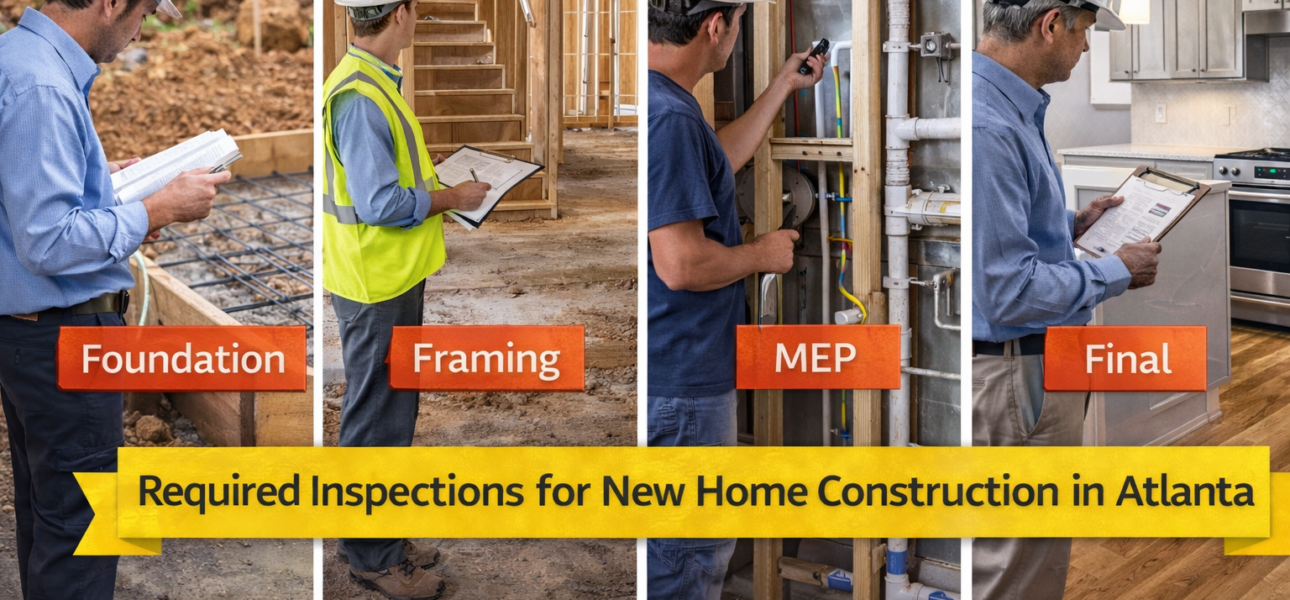
For homeowners planning new home construction in Atlanta, inspections are not optional checkpoints, they are mandatory milestones that directly affect schedule, cost, and the ability to move forward with construction. Missing an inspection, failing one, or calling an inspection at the wrong time can delay a project by days or weeks.
Understanding how inspections work, when they occur, and what inspectors are looking for helps homeowners set realistic expectations and avoid unnecessary delays during construction.
Why Inspections Matter in New Home Construction
Inspections verify that construction complies with approved plans, building codes, and safety requirements. Each inspection must be passed before the next phase of construction can proceed. If work moves forward without approval, portions of the home may need to be opened, repaired, or rebuilt.
Inspections protect homeowners, but they also enforce sequencing. Construction cannot simply move ahead based on schedule alone.
How Inspections Affect the Construction Timeline
Inspections sit directly on the critical path of new home construction. Work often pauses while waiting for an inspection to be scheduled and approved. Failed inspections result in corrections and re-inspections, which can compound delays.
Proper coordination ensures inspections are called at the right time and that work is ready to pass the first time.
Foundation and Footing Inspections
One of the earliest inspections occurs after excavation and formwork but before concrete is placed. Inspectors verify footing dimensions, reinforcement, setbacks, and compliance with approved plans.
Once concrete is poured, corrections become expensive or impossible without demolition.
Slab, Crawl Space, or Basement Inspections
Depending on the foundation type, additional inspections verify vapor barriers, reinforcement, anchor bolts, and waterproofing. These inspections must be completed before framing begins.
Foundation-related failures often result in schedule delays because subsequent work cannot proceed.
Framing and Structural Inspections
Framing inspections review the structural skeleton of the home. Inspectors check wall framing, floor systems, roof framing, shear walls, connectors, and structural details.
Framing must match approved plans and engineering documents. Changes made in the field without approval frequently trigger inspection failures.
Mechanical, Electrical, and Plumbing Inspections
Often referred to as rough-in inspections, these occur before insulation and drywall. Inspectors review plumbing supply and waste lines, electrical wiring and panels, HVAC ductwork, and equipment placement.
Coordination is critical at this stage. Conflicts between systems inside walls are one of the most common reasons for inspection corrections.
Insulation and Energy Code Inspections
Before drywall, insulation inspections verify compliance with energy codes. Inspectors review insulation type, thickness, air sealing, and installation quality.
Failures at this stage can require removal and replacement of insulation, adding time and cost.
Drywall and Interior Inspections
Some jurisdictions require inspections after drywall installation but before final finishes. These inspections verify fire separation, fastening, and code compliance in concealed spaces.
Skipping required inspections at this stage can delay final approval.
Final Inspections and Certificate of Occupancy
Final inspections occur after construction is substantially complete. Inspectors verify that all systems are operational, safety features are in place, and prior corrections have been addressed.
Passing final inspections is required before a certificate of occupancy is issued. Without it, the home cannot be legally occupied.
Common Inspection Issues That Cause Delays
Inspection delays often result from calling inspections too early, incomplete work, deviations from approved plans, or lack of coordination between trades. Simple issues such as missing documentation or unapproved field changes can stop progress.
Experienced construction management reduces these risks by ensuring work is inspection-ready before inspectors arrive.
What Homeowners Should Know About Inspection Responsibility
While builders coordinate inspections, homeowners should understand that inspections are not a formality. They influence schedule, cost, and move-in timing. Changes requested late in construction often require additional inspections.
Clear communication and realistic expectations help avoid frustration.
Why Builder Experience Matters With Inspections
Builders experienced in new home construction understand inspection sequencing, local expectations, and common pitfalls. This experience helps projects move through inspections efficiently and reduces the likelihood of repeat visits.
Our New Home Construction Atlanta services focus on managing inspections as part of an integrated construction process, not as isolated events.
Final Thoughts on Inspections in New Home Construction
Inspections are a necessary part of building a safe and compliant home. When managed properly, they keep projects moving forward. When misunderstood or poorly coordinated, they become a major source of delay.
Homeowners who understand the inspection process are better prepared for the realities of new home construction and are less likely to encounter avoidable setbacks.
Planning New Home Construction in Atlanta?
If you are preparing to build and want a clearer understanding of how inspections fit into the construction process, learn more about our approach to new home construction in Atlanta and how we manage projects from permit approval through final inspection.